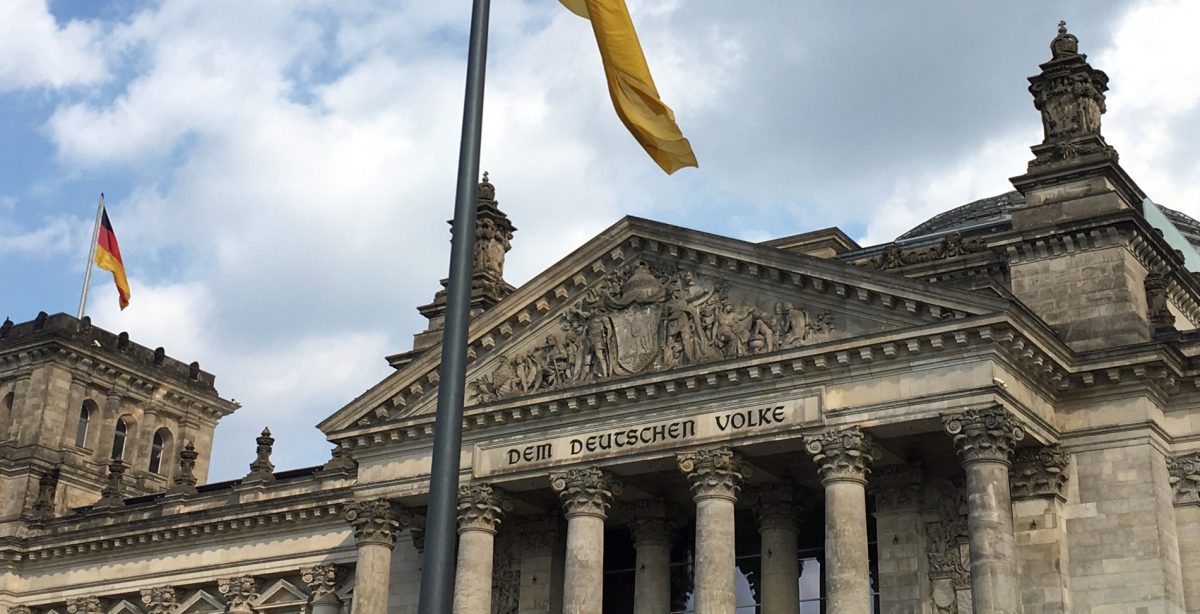
Recently I discussed proposals within Germany to tighten that country’s online hate speech laws and how a racially motivated shooting rampage in February would likely add urgency to such proposals. Since then, of course, public discourse has been dominated by COVID-19 and any debate about regulating social media would be vastly overshadowed by the global health emergency. But as countries gradually start lifting restrictions on movement and begin re-opening their economies, issues that had been temporarily dropped are gradually being taken up again by European lawmakers.
As of this coming July we can add the European Union’s second largest economy to the list of countries with laws that impose strict time frames on social media companies to remove objectionable content or face stiff fines. In the first non-public health law passed since the beginning of the COVID crisis, French lawmakers on May 13 approved a long-controversial proposal that would require companies such as Facebook and Twitter to remove “obviously illegal” content within 24 hours of being notified. Failure to do so could result in penalties up to 1.25 million Euros per incident. The law’s requirements for content related to terrorism or pedophilia are even stricter, which requires social media companies to remove such content within one hour of being alerted to such content.
Some of the controversy regarding this new law include concerns that it would be impossible for all but the largest social media companies to comply with tight time frame to remove objectionable content. Particularly for content that must be removed within one hour, the considerable technical requirements to avoid risking large fines could lead to prior censorship of content that could in fact be protected by law. According to the digital rights organization La Quadrature du Net, France’s previous Internet law that allowed police to request removal of terrorist-related content had been used to remove political content instead. La Quadrature du Monde had criticized the law shortly after it had been proposed because it would give a government agency the ability to “decide which content is hate speech and should be taken down within 24 hours,” thus making the Internet more like a broadcaster and thus subject to centralized control.
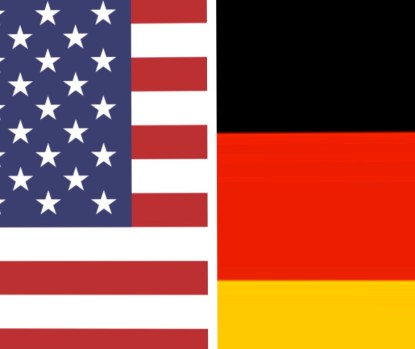
What makes this new French law interesting in the framework of German law is how it shows Germany to be the at the forefront – for well or for woe – in passing sweeping laws that require social media companies to remove certain content. Nina Jankowicz, an author specializing in international digital policy, described France as “follow[ing] in Germany’s footsteps” with this latest legislation. Le Monde even noted that with this law France now “joins most notably Germany” in regulating digital content, even as France “wants to be a driving force in Europe” in combatting hate online (link in French.)
There are, in fact, striking parallels between both countries’ laws – most notably in how they define what content they cover. The German law from 2017 (often called by its German abbreviation NetzDG) requires companies to remove, within 24 hours of receiving a complaint, content that is “obviously illegal” (in German: offensichtlich rechtswidrig). The exact corresponding French-language term for the German word for “obviously” – manifestement – is used to define the content in question here. The French law, however, goes a step or two further in that it doesn’t just require the removal of content that is “illegal,” as in the German law, but instead content that is “obviously hateful” (in French: manifestement haineux.) Because of this broader definition, there is also concern that it will be “difficult to determine” whether “content that falls into a gray area” can be considered hateful, particularly because Artificial Intelligence cannot reliably make these judgments and also because it will be difficult to find and train skilled moderators, especially when workplaces are still grappling with the impact of the coronavirus.
France, however, is not the first country to have explicitly modeled legislation regulating online content on the German prototype. From Russia’s “Fake News Law” from 2019 to Venezuela’s “Anti-Hate Law” from 2017, even countries without Western democratic structures of government have specifically referred to the NetzDG in drafting laws that appear aimed at curbing dissent. It therefore seems likely that concern over recent phenomena such as misinformation about COVID-19 spreading online will prompt yet more calls for monitoring and restricting online content, and that pre-epidemic proposals in Berlin to increase the scope of “anti hate-speech” laws will be looked at with greater urgency in Germany and other European Union members.
 GermanLegalBlog.com
One thought on ““Following in Germany’s Footsteps” – France Passes Legislation Aimed at Fighting Online Hate Speech”