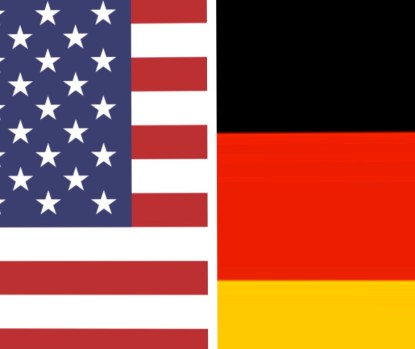

For those who are doing business in Europe or who are subjected to European law because their customers reside within the territory of the European Union, the question of which law is applicable isn’t always clear or obvious. The fact most of the countries of the European Union (at least in normal times) do not control their borders with each other and share a common currency could make it seem initially that the situation is somewhat analogous to the United States. Namely that, generally speaking, a business entity is subject to the laws of the territory with which that business has certain minimum contacts – and selling products in a particular jurisdiction would almost certainly fulfill this requirement.
So, to use an example from a well-known US Supreme Court case from 1980, if Volkswagen sells cars in the state of New York, then the company could be reasonably expected to be subject to the laws of that state. But if Volkswagen does not have any dealerships in, say, Oklahoma (which is not the case now, but it was in the 1970s when this case arose), then an Oklahoma court cannot hear a case against the company, so Oklahoma law did not apply.
The European Union and Cross-Border Commerce
Unsurprisingly, Volkswagen – being the world’s second-largest auto manufacturer in the world – sold billions of Euros worth of Diesel vehicles in France that contained a device that tricked emissions tests and ultimately emitted far more pollutants into the environment than allowed. Unsurprising too is that Volkswagen would be subject to French law, and that eventually French authorities would pursue the company for its alleged violations.
But this is where the multi-layered nature of law within the European Union starts getting complicated. The French prosecutor’s office (the Procureur de la République in French) were investigating whether the company (widely believed to be Volkswagen, although referred to in French legal documents only as “Company X”) violated French consumer protection law. But whether it could be determined that “Company X” violated domestic consumer code (specifically French law dealing with deception of consumers, or tromperie) turned on a point of European Union law, namely whether the emissions device in fact runs counter to EU law.
French prosecutors then in 2018 referred the matter to the European Court of Justice in Luxembourg for a ruling on the (il)legality of the device in question since the issue of “deception” is “based on the interpretation of . . . European regulation.” In other words, if the device was found by the European Union court in Luxembourg to have violated European Union regulations, then it is likely that the (probably German, but also French and Italian) automobile manufacturer violated French consumer protection law.
The EU Advocate General Comes Down Against “Company X”
The French prosecutors seem to about to have their answer – the Advocate General to the European Court of Justice, Eleanor Sharpston of the United Kingdom (no longer an EU member, of course) on April 30 issued an advisory opinion stating that the device issue does, in fact, violate of EU regulations. And while this opinion is non-binding and the Court of Justice is free to rule independently of this guidance, the judges in Luxembourg seem to almost always follow such guidance, and a final decision should follow in several months. The matter then moves back to Paris and the French legal system, when presumably the true identities of the car manufacturers will finally be revealed.
Multi-Layered Law and Advisory Opinions in the EU
What might be striking from a U.S. point of view is not so much the fact that a matter of local (French) law turns on a point of federal (European Union) law. In the United States, state laws can and do set out a violation of federal law as an element of a cause of action that can be heard in that state. One example of this is the U.S. Supreme Court case from 1986, Merrell Dow Pharmaceuticals v. Thompson, which involved an Ohio consumer protection law that would grant a cause of action if there was a violation of the Federal Food, Drug, and Cosmetic Act. With European law being made not just in Brussels and Strasbourg but in 27 capitals of member states, the amount of interaction between (member-) state and federal (EU) law will only grow more intricate.
What makes today’s decision by Ms. Sharpston (available from the court right now only in French) unusual from a U.S. perspective is that French prosecutors are able to ask the European Court of Justice for an essentially advisory opinion on what is ultimately a matter of French law. A rough analogy might be if prosecutors in California asked the United States Supreme Court on whether Volkswagen’s emissions system violate EPA regulations to determine if VW violated California consumer protection law. For companies doing business with any European Union member state, the need to understand which layer of law is applicable to which of their activities is paramount. It’s not enough to simply abide by German law or French law or with Brussels—these systems interact in ways they seldom do in the United States since EU members are after all sovereign nations. Moreover, the European Court of Justice has a larger role in enforcing EU regulations that many might expect, such that EU judges may be involved in cases even where no EU-wide cause of action is implicated.
Ultimately, companies doing business in Germany need to keep a close eye on what’s going on not just in Berlin but in Brussels as well, and they must carefully consider the rulings coming from the High Courts in both Leipzig and Luxembourg.
 GermanLegalBlog.com
One thought on “The Never-Ending Scandal: Volkswagen’s Diesels Appear to have Violated European Union Law, Too”